
In today’s fast-moving digital world, new slang terms appear almost every day—and one of the most confusing for beginners is “cap.” Many people search for “cap slang meaning” because they’ve seen it in chats, comments, or videos and aren’t quite sure what it means. Understanding internet slang is important because it helps you stay connected, avoid misunderstandings, and communicate naturally online.
Whether you’re chatting with friends, scrolling social media, or watching short videos, slang like “cap” is everywhere. This guide breaks everything down in simple language so you can fully understand what “cap” means, where it came from, and how to use it confidently in real conversations.
What Is the Cap Slang Meaning in Texting?
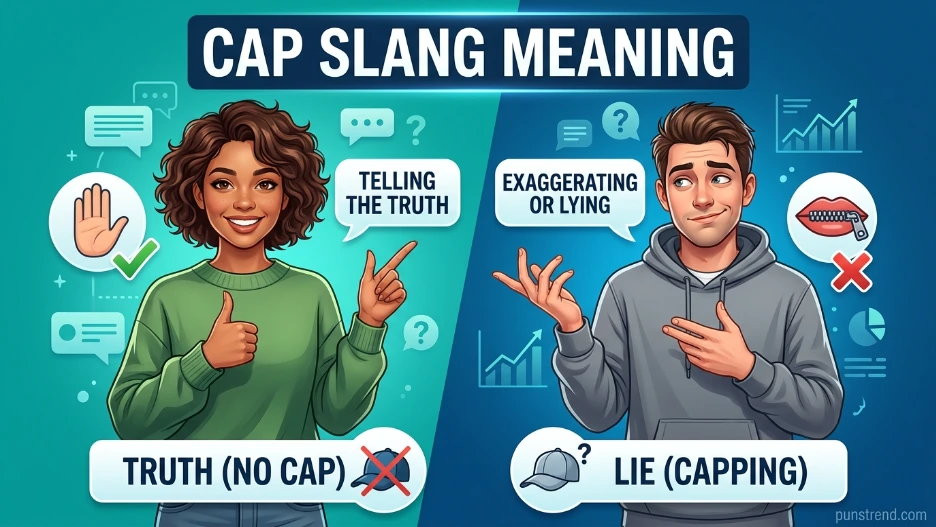
The cap slang meaning is simple:
- “Cap” means a lie or something that is not true.
- “No cap” means you are telling the truth.
Quick Examples:
- “That story sounds like cap.” → That story sounds fake.
- “I’m the best player here, no cap.” → I’m telling the truth.
This slang is widely used in texting, social media comments, and casual conversations, especially among younger people.
Cap Full Form and Short Meaning
Unlike some internet slang, “cap” does NOT have an official full form. It is not an acronym.
Short Meaning:
- Cap = Lie / Fake
- No Cap = Truth / No Lie
Some people mistakenly think it stands for something like “completely absurd phrase,” but that’s incorrect. It’s simply a slang word with a cultural origin (explained below).
Origin and Rise of “Cap” Slang
Understanding where slang comes from makes it easier to remember.
Where Did “Cap” Come From?
The term “cap” comes from African American Vernacular English (AAVE). It has been used for years in spoken language before becoming popular online.
How It Became Popular
“Cap” spread globally through:
- Hip-hop music
- Social media platforms
- Influencers and content creators
Songs and viral videos helped turn “cap” into a mainstream slang term used by millions.
How to Use Cap in Real Conversations
Here are natural examples so you can see how it’s used in everyday chat:
Basic Examples
- “You got 100 marks? That’s cap!”
- “I woke up at 5 AM, no cap.”
Friendly Chat Example
- Friend 1: “I can run 10 km without stopping.”
- Friend 2: “That’s cap bro.”
Casual Texting
- “No cap, this food is amazing.”
- “Stop capping!”
Cap Slang Meaning on Different Platforms
The meaning stays the same, but usage style can vary slightly depending on the platform.
Cap Meaning on WhatsApp
On WhatsApp, “cap” is used in personal chats:
- “You said you’ll come but didn’t. That’s cap.”
- “No cap, I miss those days.”
Tone: Casual, friendly, sometimes teasing.
Cap Meaning on Instagram
On Instagram, you’ll see it in:
- Comments
- Captions
- Stories
Examples:
- “Best movie ever, no cap.”
- “He said he’s rich… cap!”
Tone: Expressive and opinion-based.
Cap Meaning on TikTok
On TikTok, “cap” is often used in:
- Reaction videos
- Comments
- Trends
Examples:
- “This life hack works? Cap or no cap?”
- “No cap, this changed my life.”
Tone: Entertaining and exaggerated.
Cap Meaning on Snapchat
On Snapchat, it’s used in quick chats or snaps:
- “That filter looks weird, no cap.”
- “You didn’t do that. Cap!”
Tone: Fast, informal, and direct.
What “Cap” Does NOT Mean (Common Confusions)
Many people misunderstand this slang. Let’s clear that up.
❌ Wrong Meanings
- It does NOT mean a hat (in slang context)
- It is NOT an abbreviation
- It does NOT mean “capture”
✔ Correct Meaning
- Always related to truth vs. lies
Other Meanings of “Cap” (Non-Slang)
The word “cap” has different meanings outside slang:
- A hat or headwear
- A limit (e.g., “price cap”)
- A bottle lid
👉 Important: These meanings are not related to slang usage.
Similar Slang Terms and Alternatives
If you understand “cap,” you’ll also recognize these:
Similar Words
- Fake – Not real
- Lie – Not true
- BS – Nonsense
Related Slang
- No cap – Truth
- For real – Honest statement
- Deadass – Seriously (truth emphasis)
How to Reply When Someone Says “Cap”
Knowing how to respond is just as important as understanding.
Polite Responses
- “Haha, it’s actually true!”
- “I promise, no cap.”
Funny Responses
- “Why you think everything is cap?”
- “I got proof, wait!”
Flirty Responses
- “It’s no cap… especially about you 😉”
- “I’d never lie to you, no cap.”
Boundary-Respecting Responses
- “You don’t have to believe me, that’s okay.”
- “I’m being honest, but I respect your opinion.”
Is “Cap” Still Popular in 2026?
Yes—but with some changes.
Current Trends
- Still widely used in Gen-Z conversations
- Common in memes and short videos
- Sometimes replaced by newer slang
Popularity Status
- ✔ Still relevant
- ✔ Still widely understood
- ⚠ Slightly less trendy than before
Cap in Gen-Z Slang Culture
“Cap” is part of a larger slang system used by Gen-Z to:
- Express opinions quickly
- Add humor to conversations
- Keep communication short and fun
It reflects a culture that values speed, creativity, and emotional expression.
Real-Life Chat Examples
Here are more practical conversations:
Example 1
- Person A: “I finished my work in 10 minutes.”
- Person B: “Cap!”
Example 2
- Person A: “This is the best day ever, no cap.”
- Person B: “Glad to hear that!”
Example 3
- Person A: “I met a celebrity yesterday.”
- Person B: “That’s cap unless you show proof.”
FAQs
1. What does cap slang meaning in texting?
“Cap” means a lie or something untrue in texting.
2. What does no cap mean?
“No cap” means you are telling the truth or being honest.
3. Is cap a bad word?
No, it’s not offensive. It’s casual slang.
4. Where is cap slang used the most?
It is popular on TikTok, Instagram, WhatsApp, and Snapchat.
5. Can adults use cap slang?
Yes, but it is mostly used by younger people
Conclusion
The cap slang meaning is simple but powerful in modern communication. “Cap” means a lie, while “no cap” means the truth. It’s widely used across texting apps and social media platforms like WhatsApp, Instagram, TikTok, and Snapchat. By understanding its meaning, origin, and usage, you can avoid confusion and communicate more naturally online. You also now know how to respond in different situations—whether polite, funny, or flirty. As slang continues to evolve, “cap” remains a useful and recognizable term in Gen-Z culture. With this guide, you can confidently use and understand it in everyday conversations.

